
Chocolate is sensitive to heat, moisture, strong smells, and rough handling. Penn State Extension explains that chocolate should be stored in a cool, dry place because poor storage conditions can affect its appearance and quality. These risks become harder to control during a house move, when food may spend hours in boxes, vehicles, or rooms without stable temperatures.
Protecting a chocolate collection should be part of the moving plan from the start. Families already have many tasks to handle when leaving one home and getting another ready. These may include packing, arranging transport, changing utilities, and services like House Cleaning in Baltimore, MD (see also move-out move-in cleaning Baltimore MD).
Chocolate should have its own place on the moving checklist. Planning ahead keeps it separate from regular pantry items. It also lowers the risk of leaving chocolate in a warm moving truck or other hot area.
Step 1: Sort the Collection Before Packing
Start by looking at what you actually need to move. Separate unopened bars, boxed chocolates, baking chocolate, filled chocolates, and handmade items. Check packaging for storage directions and best-before dates. Items that are already damaged or close to the end of their recommended storage period may not be worth transporting.
Different chocolates also respond differently to storage. Michigan State University Extension notes that food quality depends partly on proper storage conditions, including temperature and moisture control. Products containing nuts, cream fillings, fruit, or other ingredients may have different storage needs from plain solid chocolate.
Sorting also makes packing easier. Create small groups based on how delicate or valuable the items are. A rare bar, gift box, or carefully collected selection deserves more protection than everyday baking chocolate.
Step 2: Keep Chocolate Away From Heat
Temperature is one of the biggest concerns during a move. Chocolate can soften or melt when exposed to excessive warmth. Temperature changes can also contribute to bloom, which creates a pale or whitish coating on the surface.
Research discussed by Penn State Extension explains that fat bloom can occur when cocoa butter changes within the chocolate and forms visible crystals on the surface. Although bloom does not automatically make chocolate unsafe, it can affect texture and appearance.
Before moving day, check the expected weather and consider how long the chocolate will be in transit. Avoid placing the collection in direct sunlight, beside heating equipment, or inside a parked vehicle for long periods.
Step 3: Choose Insulated Packaging
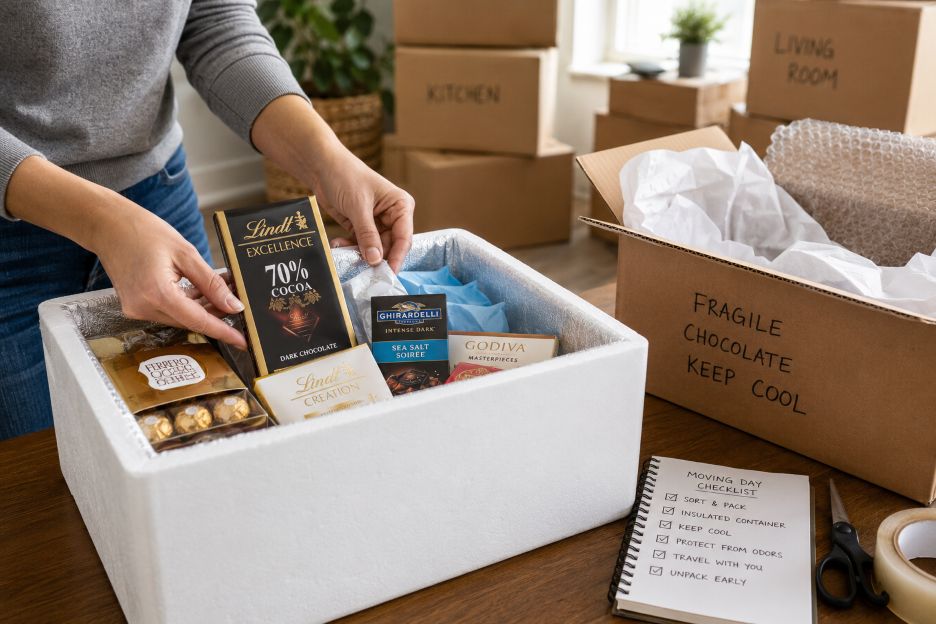
A standard cardboard moving box offers little protection against changing temperatures. An insulated container is a better choice for chocolate, especially during warm weather or a long journey.
Use a clean insulated cooler, thermal bag, or insulated shipping box. Place the chocolate inside sealed food-safe bags or containers first. This adds another barrier against moisture, odors, and accidental spills.
Cold packs may help during hot conditions, but they should not sit directly against the chocolate. Wrap them or create a barrier between the packs and the food. This reduces the chance of condensation reaching the packaging as temperatures change.
Step 4: Protect Against Odors and Moisture
Chocolate should not share a box with cleaning products, scented candles, perfumes, spices, or strongly scented foods. The Hershey Company advises keeping chocolate in a cool, dry environment and tightly wrapped because storage conditions can affect its quality.
This becomes especially important when cleaning and packing happen at the same time. Keep food containers away from household chemicals. Do not place chocolate on recently cleaned surfaces until they are dry and free from cleaning products.
Moisture also deserves attention. U.S. Food and Drug Administration food storage guidance stresses the importance of keeping foods properly stored and protected from contamination. Sealed packaging helps create that protection while belongings move between homes.
Step 5: Decide What Travels With You
Some chocolate should travel separately from the main household shipment. This is especially helpful for expensive collections, delicate handmade pieces, gifts, or items that are difficult to replace. Following a few extra steps for protecting chocolate during a move can also help reduce problems caused by heat, moisture, and rough handling.
Keep these items in an insulated container in the passenger area of the vehicle. The temperature there is usually easier to manage than the conditions inside a moving truck or closed cargo area.
Pack the container so the contents cannot slide around. Use clean padding around boxed chocolates and keep heavier items away from delicate pieces. Label the container clearly so nobody mistakes it for an ordinary moving box.
Step 6: Prepare the New Storage Area
Chocolate should have a suitable destination before it arrives. Choose a cool, dry cupboard away from ovens, radiators, sunny windows, and other sources of heat. Clear and clean the shelf before unpacking.
For most products, follow the manufacturer’s storage directions rather than automatically putting everything in the refrigerator. Refrigeration can expose chocolate to moisture and odors if it is not properly sealed.
Step 7: Unpack Chocolate Early
Do not leave the chocolate collection sitting among moving boxes for several days. Unpack it soon after arriving and inspect the packages for melting, crushing, moisture, or broken seals.
If chocolate has become unusually warm, allow it to return gradually to suitable storage conditions. Avoid repeatedly moving it between very cold and warm environments. Stable conditions help preserve texture and appearance.
A Small Part of a Better Moving Plan
Moving chocolate safely comes down to planning, insulation, careful handling, and temperature control. Sort the collection first, protect it from moisture and odors, and keep valuable pieces with you when possible. Then unpack them soon after reaching the new property.
These steps fit naturally into the wider process of leaving one home and setting up another. When food storage, packing, transport, and property preparation are planned together, there is less chance that a carefully collected box of chocolate will end up forgotten in a hot vehicle or buried beneath household belongings.